
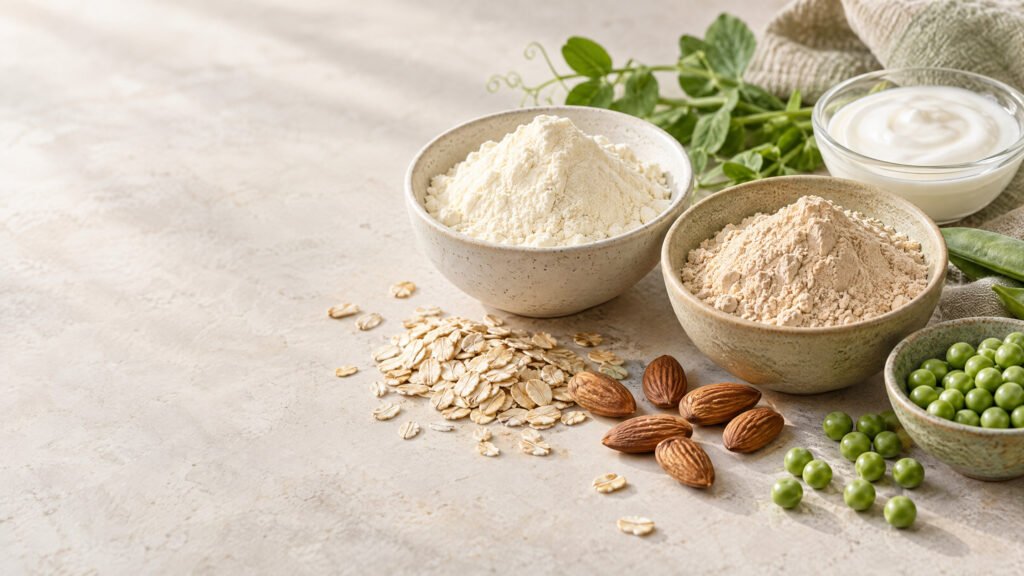
When comparing whey vs. plant protein powder, the best fit depends on the protein source, the rest of the ingredient list, your food preferences and any allergies—not on a universal winner. Products differ, and evidence about protein quality can depend on the specific ingredient and how it is processed.
Medical-information disclaimer: This article is for general education, not medical advice. Ask a qualified health professional about individual nutrition questions, allergies, or a medically restricted diet.
Affiliate disclosure: Some links in this article may be affiliate links, including ClickBank links. If you buy through them, NutritionExtract may earn a commission at no extra cost to you. This article does not endorse an unverified offer.
What’s in whey and plant protein powders?
Whey is a protein from milk and is commonly sold as whey concentrate or isolate. Plant-based products may use soy, pea, rice, or other plant proteins, often alone or in blends. “Plant protein” therefore does not identify one uniform ingredient or nutrition profile. A peer-reviewed review found that plant proteins vary in amino-acid composition and digestibility; soy and pea, for example, are not interchangeable with every other plant source. These differences are one reason to check the specific protein ingredient rather than choosing by the front-of-package claim alone (review of plant-protein nutritional quality).
Whey is not suitable for someone avoiding milk proteins. A plant-based label does not guarantee an allergen-free product: some formulas contain soy, and manufacturing may involve shared equipment. If you have a food allergy, read the ingredient and allergen statements each time; the FDA identifies milk, soy, peanuts, tree nuts, wheat, and sesame among the major food allergens and explains how sources are disclosed on labels (FDA food-allergy labeling guidance). If the label leaves a safety question unanswered, contact the manufacturer or choose a product whose labeling you can verify.
Compare serving size—not just the scoop
A scoop is a convenience, not a standardized comparison unit. Check the stated serving size in grams, how many scoops make it up, and the grams of protein per serving. Two tubs can look similar while a serving differs in size or protein content. Compare products using the stated amount and protein grams, and consider calories and other nutrients in the context of how you plan to use it. Also check whether the package contains one serving or several; the amount you actually scoop may not match the label’s serving.
How to read the ingredient and nutrition label
1. Identify the protein source
Look near the start of the ingredients for whey, milk-protein ingredients, soy, pea, rice, or a named blend. Notice added flavorings, thickeners, sweeteners, oils, vitamins, or other ingredients that matter to your preferences. “Natural” or “clean” on the front does not replace reading the full list.
2. Check allergens and cross-contact
Scan for a “Contains” statement and any advisory language such as “may contain.” A plant-based powder can still contain soy or be made around other allergens. Allergen statements do not replace checking the ingredients, and a product label cannot tell you whether a particular formulation is right for your personal allergy needs.
3. Look at added sugar
Check the added-sugars line where available, as well as total sugars and the ingredient list for sweeteners. The FDA explains that added sugars appear separately from total sugars on Nutrition Facts labels; the number of grams is per labeled serving, so serving size matters when comparing products (FDA guide to added sugars on the label). Some powders are unsweetened and others are flavored or sweetened; neither choice is automatically right for everyone. Compare what is in the product with your taste and nutrition preferences.
Why protein needs and preferences vary
Age and sex are among the factors used in establishing dietary reference intakes, and actual individual requirements may differ from reference values, according to the NIH Office of Dietary Supplements (NIH nutrient recommendations). Activity, health status, life stage, overall diet, appetite, budget, and convenience may also shape what someone chooses. This article does not prescribe a protein dose: the amount of protein a person needs is individual, and it can come from foods as well as supplements.
Consider whether a powder fills a practical gap for you, fits your dietary pattern, and is tolerable and affordable. If you already get protein through meals and snacks, a powder may not add anything you need. If you have a medical condition, pregnancy-related nutrition question, or a history of food allergy, a clinician or registered dietitian can help you assess choices in context.
The bottom line
There is no single answer to whey vs. plant protein powder for every shopper. Start with the actual protein source and serving-size information, then review ingredients, allergens, and added sugars. Choose based on your needs and preferences, not broad product promises—and remember that supplements are optional, not necessary for everyone.
Sources
- Plant Proteins: Assessing Their Nutritional Quality and Effects on Health and Physical Function (peer-reviewed review).
- U.S. Food and Drug Administration: Food Allergies.
- U.S. Food and Drug Administration: Added Sugars on the Nutrition Facts Label.
- NIH Office of Dietary Supplements: Nutrient Recommendations and Databases.